
Resisting the Capitalist Mindset
When possible, we should resist the urge to spend our money with companies and businesses that hurt our society more than help it.

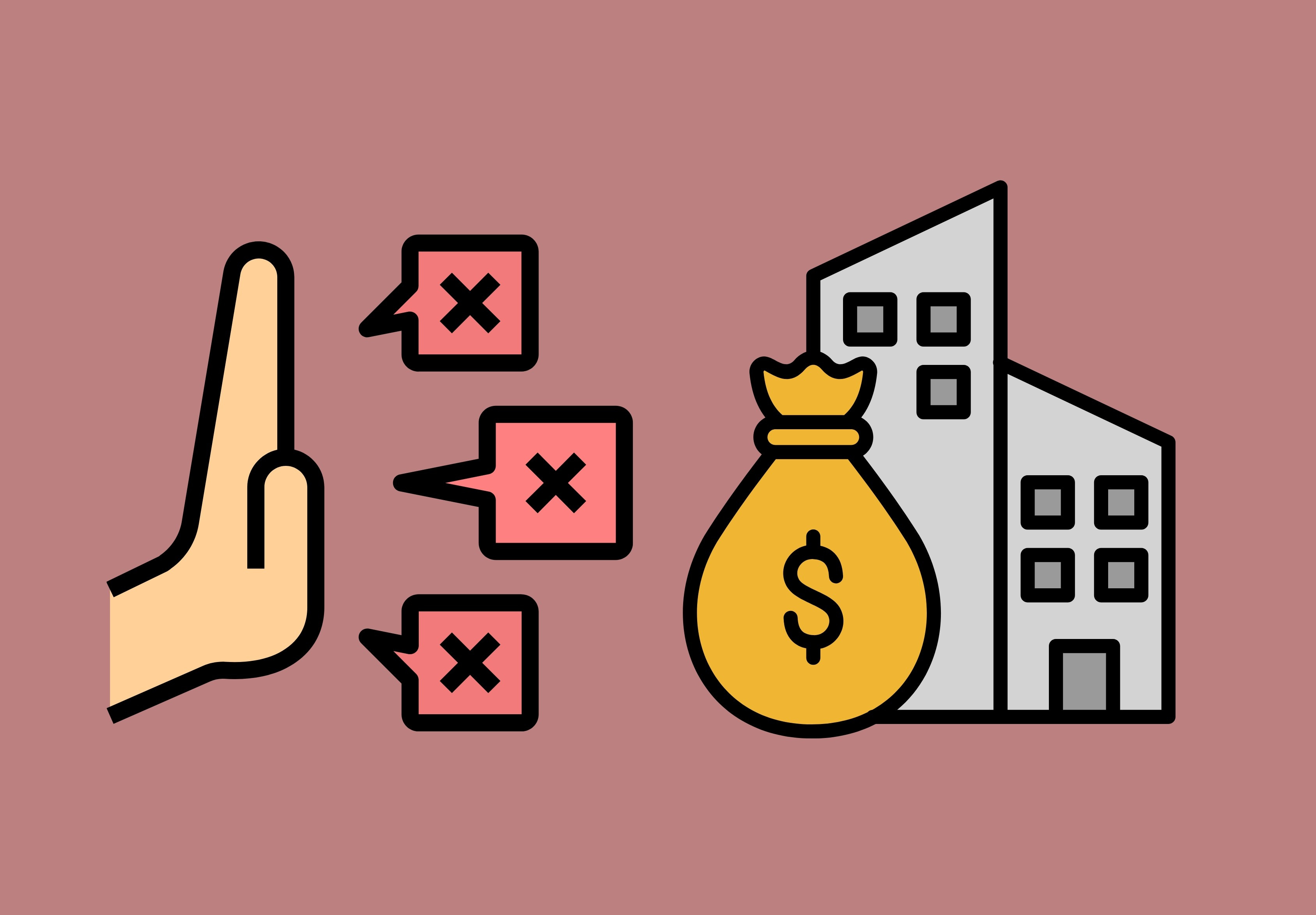
What I watched: “The capitalist mindset” by Andrew Acevedo. Posted December 9, 2025.
It’s the end of year holiday season as I write this. Over the past couple of weeks, I’ve been putting up a post or two each day on one of my social media platforms encouraging my followers who live in my area to frequent small, local, and queer-owned businesses.
The tagline for each post was “Shop local. Shop small. Shop queer-friendly. Not just this season, but always.”
That’s what I’d like to discuss here today – why giving our money to such businesses is important and why it’s a mindset we need to embrace not just for a few days out of the year, but always.
Let me add the caveat that I live in an LGBTQ inclusive neighborhood with a huge LGBTQ population. Thus, the queer-owned part of the tagline. But were I to expand this out into the greater world it would read something like “Shop local. Shop small. Shop queer-, minority-, and women-owned. Not just this season, but always.” I know there are white heterosexual men who are decent human beings and own some great businesses. I give them my business too. But the truth is they already have a leg up on everyone else so keeping the other businesses in mind is always important.
As part of the current American political landscape, many people are rightfully boycotting certain companies. That is good. Giving people our money has power. Withholding our money also has power. We should use that power.
But the thing is, boycotts are always imperfect. Sure, sometimes we can completely avoid certain companies or businesses. But sometimes we can’t, or it’s a much heavier lift to avoid them.
For example, it’s rather easy for me not to shop at a certain national retailer that has seen a precipitous drop in sales since the boycott “targeting” them started. I have zero interest in owning one of those “musky” EVs. When a certain music streaming service was “spotted” advertising for the orange one’s racist thugs, it was a relatively simple task to move to an alternative (and I’ve discovered better) music streaming service.
But other separations aren’t so easy.
You might have been pointed to this post because of a notice I published on one of the social media platforms that’s been considered complicit in helping to attack our democracy. While I’ve started accounts on alternative and more socially responsible social media platforms, and I use them more frequently now, giving up my audience on all the platforms is difficult. And on some level, it feels like I’m ceding important ground to the enemy if I do. Though I have avoided posting on X since the musky one went entirely right-wing bonkers.
I have friends who work in longstanding jobs for companies that have recently bent the knee in some way to the growing autocratic operatives populating far too much of our country’s leadership now. Many of them don’t have the luxury of quitting their job, especially as the US job market has stalled so badly. They have little choice but to keep working for a company they know is contributing in some way to the attempted crushing of our democracy and freedoms.
So, what’s a person to do in this quagmire of sometime difficult decisions. This brings me to the video by Andrew Acevedo that is the topic of this post.
What I hope to emphasize here is that while we live in a capitalist culture, there are better and worse ways for capitalism to function, and we can make better choices once we acknowledge that.
Acevedo starts out by explaining that for most of human history societies have been organized around the principle of use-value.
In a use-value driven system, we produce something that we then can sell for money that we then can exchange for a new product. So, in this system, the money is just an intermediary, and we can call this a steady state economy, and it’s how most of us operate in our daily lives, and it’s how our economies have operated historically.
Acevedo then explains that beginning in the 1700s, a new capitalist economic approach began to take hold. The move from a use-value economy to a capitalist one shifted the focus to exchange-value. That shift profoundly changed the industrialized world, those countries we often refer to as the “developed” countries. Depending on the criteria used, there are somewhere between 30 to 40 such developed countries. That said, rampant runaway capitalism affects the entirety of the world since economies are now globally interconnected in inextricably linked ways.
This is the most important part of Acevedo’s video essay.
Remember that in the traditional use-value system, money was just an intermediary. But in exchange-value driven capitalism, money is the whole point. So, in capitalism, we start with money or capital, then we produce a product, or commodity, with the goal of accumulating even more money. So, in capitalism, it’s the commodity that you produce that is an intermediary for making profits that can then in turn be reinvested to make even more profits in a never-ending cycle of exponential growth.
Acevedo then offers a real-life example of a café near where he lives in Denmark, a café that’s organized around use-value. The café earns a steady state profit each year to pay their bills while offering the owner a decent standard of living. This is how most small businesses operate and that’s one of the reasons why I’m such a champion of giving small businesses our money as much as we can.
Then Acevedo explains that his example café differs considerably from the exchange-value driven companies that have popped up like economic blemishes across our country and the world. Most of the big retail and fast-food chains fall into this category. An exchange-value driven company takes its profits to invest in capital to make yet more money. Exchange-value companies are organized around the capitalist concept of exponential (and unlimited) growth.
If you’ve never considered whether infinite exponential economic growth is possible, there are lots of great articles and videos about why it’s not. Check out “Can the economy grow forever?” for one good concise discussion of the topic. Another good explanation about the limits of infinite economic growth is Barry’s Economics’ “Why Growth Is Over.”
Most of us don’t like how the virus of exchange-value logic has taken over so much of our economy. Most of us hate it. To use Acevedo’s examples:
We hate that we must now subscribe to software services indefinitely that we in the past simply bought once.
We hate that the internet used to be a fun place to satisfy our curiosity or stay connected with people we care about but has turned into an incessant cesspool focused only on capturing and keeping our attention.
We hate that our education and healthcare systems are awash in exchange-value logic through privatization of things that should be provided to everyone free of charge for the common good.
We hate that housing is now seen as an investment rather than as primarily a place to live which has driven up the cost of housing dramatically.
Then Acevedo explains how all of that pertains to his video channel and it echoes one of the reasons I’ve tried to keep this Musings from a Curious Mind newsletter, my Love at the Edges newsletter, and my Medium page open for all to read with only a few strategic exceptions. I try to stay focused on creating good content rather than only on how I can aggressively monetize them.
Yes, I make money from my newsletters, but mostly because many of my readers support my work with the gift of paying for a subscription or supporting me through my Patreon. It’s a difficult balancing act sometimes to eke out a decent profit from what I create while still trying to keep my content as available as possible to a wide audience.
All that brings me to the gist of this post, and that’s to encourage you to consciously spend your money as much as you can in local, small businesses. When possible, frequent businesses owned and run by people who start at a societal disadvantage such as LGBTQ, people of color, immigrants, and women. That’s how we bring about change.
If enough people avoid the big pariah companies, slowly things can change. If we do give our money to a big company, when possible, we should give our business to those with better values and ethics, who treat their workers well and truly respect their customers and the society in which they function.
When it’s difficult or impossible to fully pull away from the worst of the companies, then we should remain conscious that we’re doing so, which perhaps leads to us giving them a bit less of our money than we did before.
Whatever we do, we should not simply spend our money on the cheapest or most convenient just because it’s the cheapest and most convenient. Often, I walk or take transit to a local store to buy something, even if it’s going to cost a bit more, rather than ordering it online with a few convenient clicks. I do that because I know that ultimately that’s better for my neighborhood, city, country, and the world.
Please realize how you spend your money will never be perfectly aligned with sustainability or equity or supporting a fully use-value economy, but the more we try to spend our money carefully, the better things will be going forward.
You can use this link to access all my writings and social media. My content is usually open and free to view, but for those who are able your paid subscription (click the Subscribe button) or patron support are always appreciated.